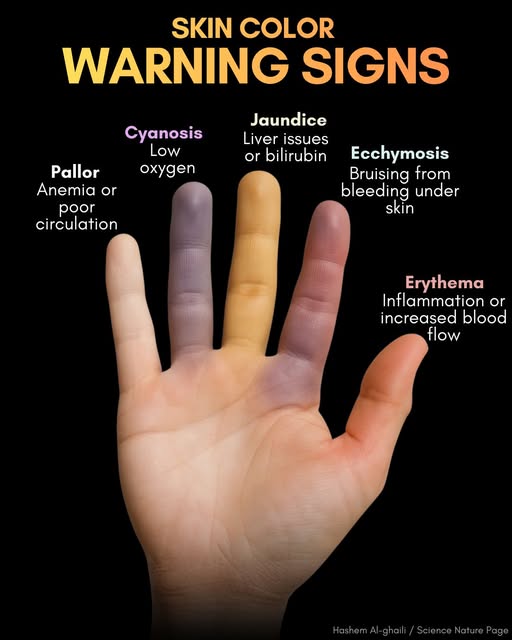
Your skin does much more than protect your body—it can also serve as an early warning system for what’s happening beneath the surface. Long before certain illnesses cause noticeable symptoms, your skin may begin to change in ways that reveal underlying health problems.
Doctors often examine the skin carefully because changes in its color, texture, or appearance can provide valuable clues about conditions affecting the blood, heart, lungs, liver, and other vital organs. While many skin changes are harmless, some deserve prompt medical attention.
🤍 Unusual Paleness (Pallor)
If your skin suddenly appears much paler than usual, it may be more than just fatigue.
Pallor can occur when there isn’t enough healthy blood reaching the skin or when the body has a reduced number of red blood cells. This is commonly associated with anemia, which limits the amount of oxygen delivered throughout the body. It may also be linked to poor circulation, blood loss, or certain chronic illnesses.
People with pallor may also experience:
- Fatigue
- Weakness
- Dizziness
- Cold hands and feet
- Shortness of breath
💙 Bluish Skin or Lips (Cyanosis)
A bluish or purple tint around the lips, fingertips, or nail beds can be a warning that the blood is not carrying enough oxygen.
Known as cyanosis, this symptom may develop in people with lung diseases, heart conditions, severe asthma attacks, blood circulation problems, or other disorders that reduce oxygen levels.
Because oxygen is essential for every organ, cyanosis should never be ignored—especially if it appears suddenly or is accompanied by difficulty breathing or chest pain.
💛 Yellow Skin and Eyes (Jaundice)
One of the most recognizable skin warning signs is jaundice, which causes the skin and the whites of the eyes to turn yellow.
This happens when bilirubin, a yellow pigment produced during the breakdown of red blood cells, builds up in the body instead of being properly processed by the liver.
Jaundice may indicate:
- Liver disease
- Hepatitis
- Gallbladder problems
- Blocked bile ducts
- Certain blood disorders
Prompt medical evaluation is important because many of these conditions require treatment.
🟣 Large or Unexplained Bruises (Ecchymosis)
Bruises usually appear after an injury, but bruises that develop easily or without a clear cause may signal an underlying medical problem.
Large bruises, known medically as ecchymosis, can result from:
- Blood clotting disorders
- Low platelet counts
- Vitamin deficiencies
- Liver disease
- Certain medications, including blood thinners
Frequent unexplained bruising should be discussed with a healthcare professional.
ADVERTISEMENT
