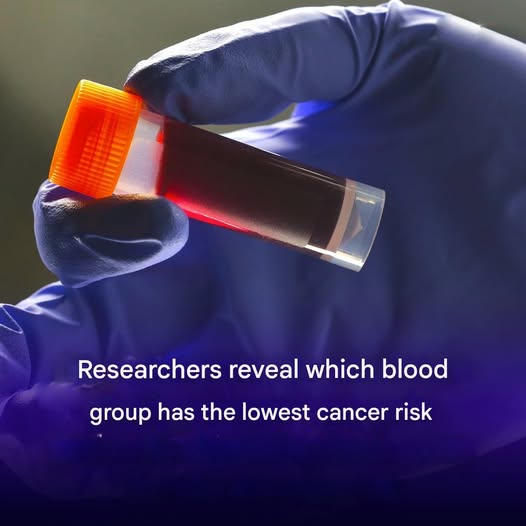
Your blood type may be more than just a label used during a blood transfusion.
Scientists have spent years investigating whether the ABO blood group system—A, B, AB, and O—may also be connected to a person’s risk of developing certain diseases, including cancer.
And one pattern has appeared repeatedly in research:
People with blood group O often appear to have a lower risk of developing certain types of cancer compared with people who have non-O blood types.
But there is an important catch.
Having type O blood does not mean that someone is protected from cancer, and having type A, B, or AB blood does not mean that a person will develop cancer.
The relationship is much more complicated.
🩸 Why Would Blood Type Have Anything to Do With Cancer?
Your ABO blood group is determined by specific molecules called antigens found on the surface of your red blood cells.
These blood-group molecules are not limited to red blood cells. Related ABO antigens can also be found on other cells and tissues throughout the body.
Researchers have therefore questioned whether differences in these molecules could influence processes involved in inflammation, immunity, infection, and the behavior of abnormal cells.
One possibility is that blood-group antigens may influence how cells interact with their surrounding environment.
Another possibility involves inflammation and the immune system.
Cancer development is influenced by many biological processes, and researchers are investigating whether ABO-related genetic differences may subtly affect some of these pathways.
However, scientists have not yet established one single mechanism that explains all of the associations.
ADVERTISEMENT
