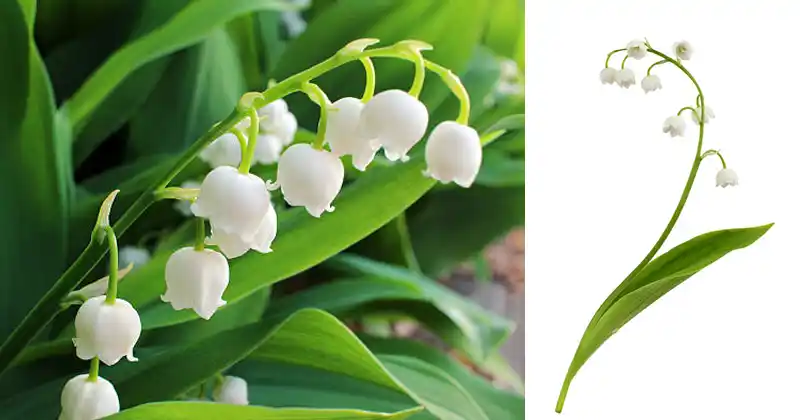
The European Lily of the Valley, also known by its scientific name Convallaria majalis, is a delicate and beautiful plant often admired for its sweet-smelling white bell-shaped flowers. It’s a favorite in spring gardens across Europe and beyond due to its pleasant aroma and elegant appearance. However, behind this beauty lies a serious danger: the entire plant is poisonous.
Whether you’re a gardener, a forager, a pet owner, or just someone who enjoys nature walks, it’s important to know how to recognize this plant and understand its risks. This guide provides everything a beginner needs to know—from how to identify it, to how to stay safe and avoid accidental poisoning.
How to Identify Lily of the Valley
Lily of the Valley is fairly easy to recognize when in bloom, especially in spring or early summer. Look for the following traits:
Visual Features:
- Flowers: Small, white, bell-shaped flowers hanging down like little lanterns from one side of a curved stem. They appear in clusters, usually in late spring.
- Leaves: Broad, lance-shaped green leaves that grow from the base. Typically 2-3 leaves per plant, around 15–25 cm long.
- Height: Grows low to the ground, usually between 15 to 30 cm tall.
- Stem: Flower stalks are slender and smooth with a slight arch.
- Roots: It spreads through underground rhizomes, forming dense colonies.
Smell: The flowers have a very strong and sweet fragrance, often used in perfumes.
Where You’ll Find It
- Commonly found in woodlands, shady gardens, and forest edges.
- Often used as an ornamental ground cover in parks and private gardens due to its rapid spreading ability.
- Native to Europe, but it can also be found in temperate regions of North America and Asia.
The Danger: Toxicity of Lily of the Valley
see next page 💕👇
ADVERTISEMENT
