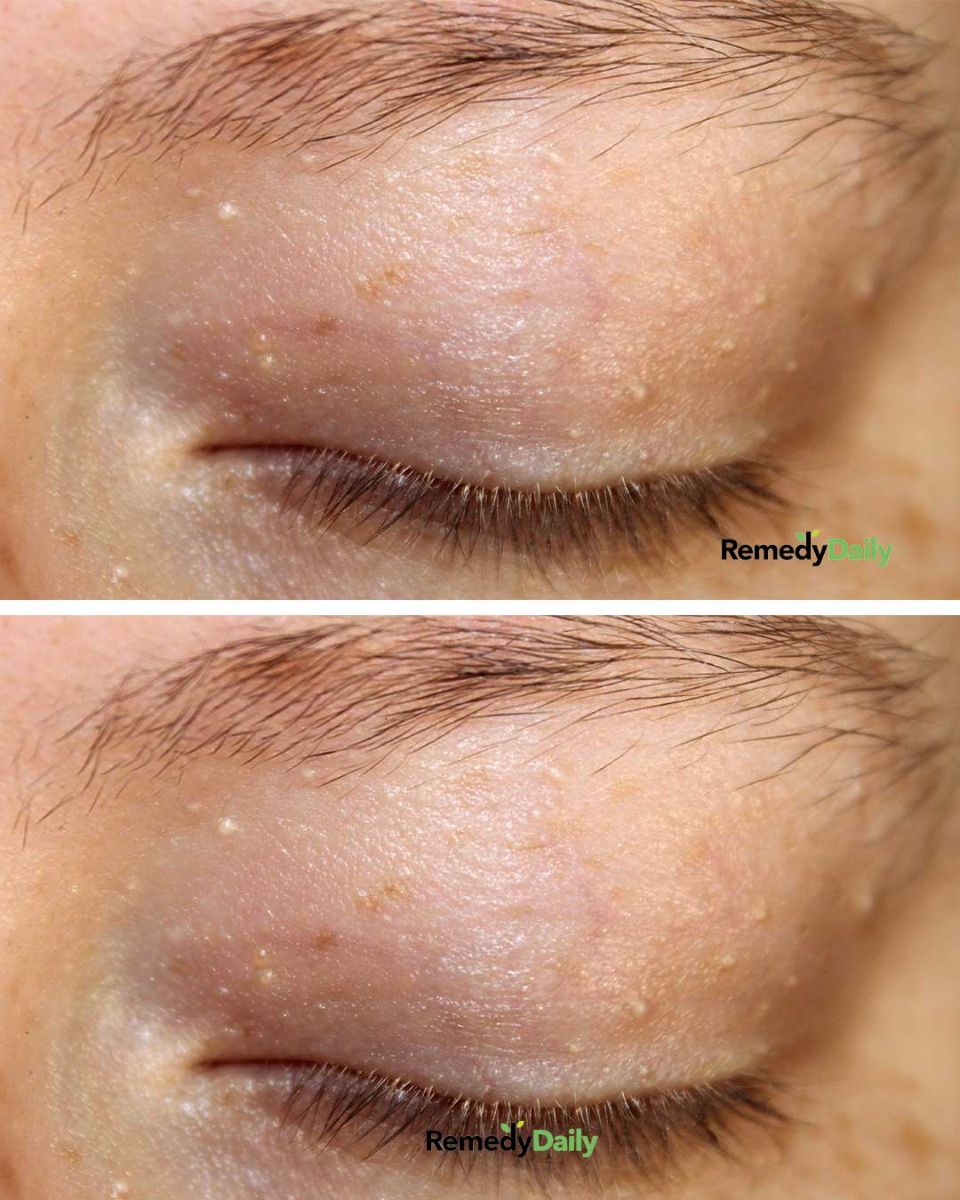
Noticing small white bumps around your eyes can be concerning, especially when they don’t resemble typical pimples. These tiny, pearl-like bumps are often mistaken for acne, but they are actually a different skin condition known as milia. Milia are common, benign, and usually harmless, but they can be persistent and cosmetically bothersome.
Understanding what these bumps are and how to treat them safely is crucial. Many people are tempted to pop them, thinking they are pimples, but this can lead to more harm than good. In this article, we will explore what milia are, their causes, and the best ways to treat and prevent them.
1. Understanding Milia: What Are These White Bumps?
Milia are small, white cysts that form when keratin, a protein found in skin, hair, and nails, becomes trapped beneath the outer layer of the skin. They are typically 1 to 2 millimeters in diameter and can appear in clusters, often around the eyes and on the cheeks. Unlike pimples, milia are not caused by bacteria or clogged pores, and they do not have an opening on the skin’s surface.
Milia are classified into two types: primary and secondary. Primary milia occur spontaneously and are common in newborns, while secondary milia can develop after skin trauma, such as burns or blistering injuries. Despite their appearance, milia are not a sign of infection or poor hygiene.
2. Common Causes of Milia Around the Eyes
Several factors can contribute to the development of milia around the eyes. One common cause is the use of heavy or occlusive skincare products that can trap keratin under the skin. Sun damage is another factor, as it can thicken the outer layer of the skin, making it harder for dead skin cells to shed naturally.
Other causes include genetic predisposition, aging, and certain skin conditions that affect the skin’s ability to exfoliate properly. In some cases, milia can also form after procedures like laser treatments or dermabrasion, where the skin’s surface is disrupted.
3. Why You Shouldn’t Pop Milia
Popping milia is not recommended because, unlike pimples, they do not have an opening to the surface of the skin. Attempting to pop them can lead to skin damage, scarring, and potential infection. The skin around the eyes is particularly delicate, so improper handling can result in more harm than good.
Additionally, squeezing or picking at milia can cause inflammation and redness, making them more noticeable and harder to treat. It’s best to leave milia removal to professionals who have the right tools and techniques.
4. Safe Home Remedies to Try
While professional treatment is often the most effective way to remove milia, there are some home remedies that may help. Regular exfoliation with a gentle scrub can help prevent the buildup of dead skin cells that contribute to milia formation. Look for products containing alpha hydroxy acids (AHAs) or beta hydroxy acids (BHAs), which can aid in skin cell turnover.
Applying a warm compress to the affected area can also soften the skin and facilitate natural exfoliation. However, it’s important to be patient, as these methods may take time to show results.
5. Over-the-Counter Treatments for Milia
see next page 💕👇
ADVERTISEMENT
ADVERTISEMENT
