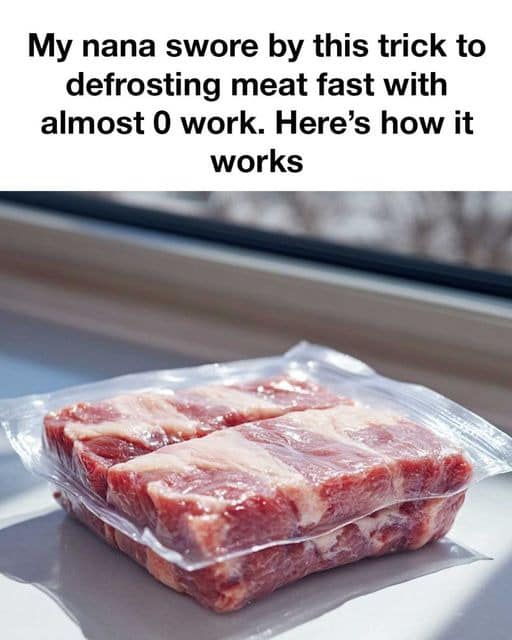
For generations, home cooks have sought quick and efficient ways to defrost meat without sacrificing quality or safety. My Nana, a culinary wizard in her own right, swore by a particular trick that makes defrosting meat almost effortless. This method isn’t just a nostalgic nod to her genius in the kitchen; it’s a practical, swift solution to a common culinary challenge. Whether you forgot to take out the meat for tonight’s dinner or need to get meal prep done in a flash, this trick is a lifesaver. In this article, I’ll walk you through Nana’s secret to defrosting meat quickly with minimal effort.
Science Behind Rapid Defrosting
Understanding the science behind Nana’s trick can help you appreciate its effectiveness. The key lies in leveraging water’s high thermal conductivity. Water transfers heat faster than air, allowing the meat to defrost more rapidly and evenly. Additionally, the method ensures the meat remains in a safe temperature zone, minimizing the risk of bacterial growth. By maintaining a balance between thawing quickly and safely, this trick combines both scientific principles and practical wisdom to deliver optimal results.
Gathering Your Supplies
Before you start, make sure you have everything you need for Nana’s defrosting method. Here’s a quick checklist:
A large bowl or sink
Cold water
A heavy object like a pot or pan
The meat you need to defrost
If your meat is already vacuum-sealed or in a water-tight plastic bag, you’re good to go. Otherwise, you might need plastic wrap or a resealable plastic bag to ensure the meat stays dry during the process.
Step-by-Step Guide to Defrosting Meat
Place the meat in a water-tight plastic bag if it’s not already sealed. This prevents water from seeping in and compromising the texture or flavor of the meat.
Fill a large bowl or sink with cold water. Avoid using hot water, as it promotes bacterial growth and can start to cook the meat’s outer layers prematurely.
Submerge the bagged meat in the cold water.
To keep the meat fully submerged, place a heavy object, such as a pot or pan, on top of the bag. This ensures even contact with the water on all sides.
Allow the meat to sit in the water. For best results, change the water every 30 minutes to maintain a consistent cold temperature. Most meat will defrost within 1-2 hours, depending on its size and thickness.
Tips and Tricks for Optimal Results
For the best defrosting outcomes, consider these additional tips:
Use a meat thermometer to ensure that the meat does not enter the ‘danger zone’ between 40°F and 140°F.
Plan ahead and use this method only when in a pinch; otherwise, refrigerate to defrost naturally, which retains more moisture.
Pair this method with meal prepping; for instance, divide large cuts of meat into smaller portions before freezing so they defrost more quickly next time.
Common Mistakes and How to Avoid Them
Avoid these pitfalls to ensure your meat defrosts perfectly:
Read more on next page
ADVERTISEMENT
