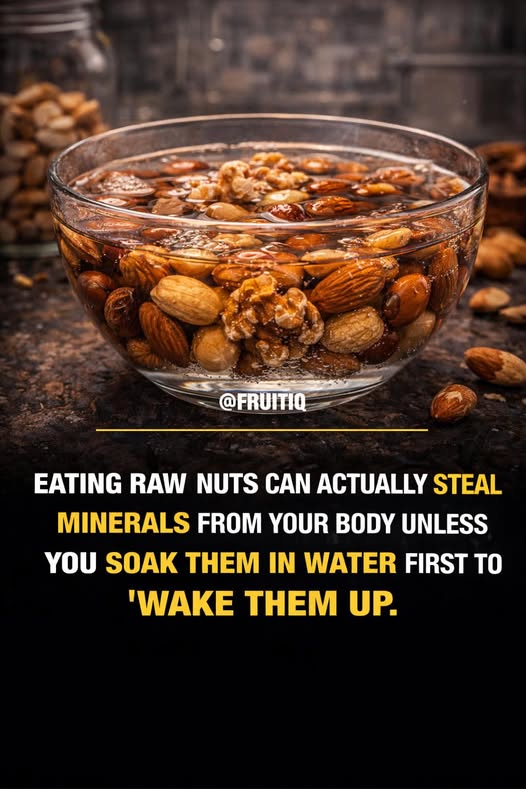
🥜 Which Nuts & Seeds Benefit Most?
The biggest changes are seen in:
-
Almonds
-
Walnuts
-
Pumpkin seeds
-
Sunflower seeds
-
Sesame seeds
Peanuts (technically legumes) also contain phytic acid and can benefit from soaking.
🧠 Is Soaking Necessary?
Here’s the balanced truth:
✔ Soaking may improve digestibility.
✔ It can reduce phytic acid levels.
✔ It may help people with sensitive digestion.
But:
❗ If you eat a varied diet rich in minerals, phytic acid is unlikely to cause deficiency.
❗ Roasting also reduces some phytic acid.
❗ The body adapts over time to normal phytate intake.
For most healthy people, soaking is a beneficial optimization, not a requirement.
🧂 How to Soak Nuts Properly
-
Place raw nuts in a bowl.
-
Cover with filtered water.
-
Add a pinch of sea salt (optional).
-
Soak 8–12 hours.
-
Rinse thoroughly.
-
Dry at low temperature if you want them crunchy again.
Store in the fridge for freshness.
🔬 The Bigger Picture
Phytic acid isn’t the villain it’s often portrayed to be. It’s part of a natural system designed to preserve life.
Soaking and sprouting simply:
-
Improve digestibility
-
Enhance mineral accessibility
-
Reduce enzyme inhibitors
-
Make nuts gentler on the gut
It’s less about “detoxing” and more about working with nature’s design.
ADVERTISEMENT
