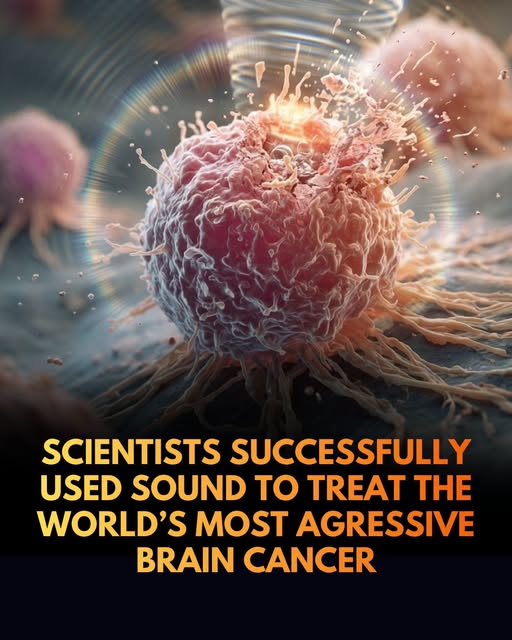
Glioblastoma is one of the deadliest forms of brain cancer, with an average survival time of only 12 to 18 months after diagnosis despite surgery, radiation, and chemotherapy. Its aggressive nature and resistance to treatment have made it one of the greatest challenges in cancer medicine.
Now, researchers at the University of Virginia Comprehensive Cancer Center have developed a promising new approach that uses MRI-guided focused ultrasound to deliver genetic therapy directly into brain tumors—offering new hope for patients facing this devastating disease.
Why Is Glioblastoma So Difficult to Treat?
One of the biggest obstacles in treating brain cancer is the blood-brain barrier (BBB). This protective network of tightly packed blood vessels shields the brain from harmful substances circulating in the bloodstream.
While the BBB is essential for protecting the brain, it also blocks many life-saving cancer drugs, preventing them from reaching tumors in effective concentrations.
As a result, even the most advanced therapies often struggle to penetrate the brain and destroy glioblastoma cells.
A New Strategy Using Sound Waves
Instead of relying on more powerful drugs, scientists focused on improving how treatments reach the tumor.
Their innovative technique combines:
- MRI-guided focused ultrasound
- Microscopic gas-filled bubbles (microbubbles)
- Gene-regulating nanoparticles carrying microRNAs
When ultrasound waves are precisely directed at the tumor, the microbubbles gently vibrate, temporarily opening the blood-brain barrier in a highly targeted area.
This brief opening allows therapeutic nanoparticles to pass into the brain tissue without surgery.
ADVERTISEMENT
