😌 No Drilling. No Numbing Injection.
One of the biggest advantages of SDF is how simple the application can be.
For young children, traditional treatment of severe cavities can sometimes involve drilling, local anesthesia, multiple appointments, or even treatment under general anesthesia.
SDF offers another option for stopping active decay while avoiding many of those immediate procedures.
The trial also found no difference in pain between the SDF and placebo groups, and most reported adverse events were mild to moderate.
That could make the treatment particularly valuable for very young children who are anxious about dental procedures.
🖤 There Is One Major Drawback
SDF does have an important cosmetic disadvantage.
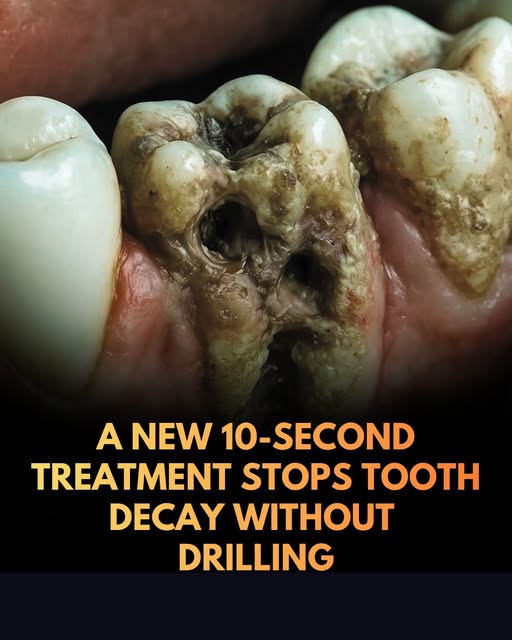
The treated decayed area generally becomes permanently dark or black.
For baby teeth that are toward the back of the mouth, some parents may consider this an acceptable trade-off for avoiding drilling and anesthesia.
For visible front teeth, however, the discoloration can be a significant concern.
Parents therefore need to discuss the advantages and disadvantages with their child’s dentist before deciding whether SDF is appropriate.
🇺🇸 Could This Lead to FDA Approval for Treating Cavities?
The new trial was specifically designed to provide evidence that could support U.S. Food and Drug Administration consideration of SDF for arresting cavities in young children. The authors concluded that their findings support consideration for FDA drug approval.
However, it is important not to say that FDA approval has already been granted.
SDF has been available in the United States for certain dental uses, but its regulatory status does not currently mean that it has FDA approval specifically as a treatment for severe childhood tooth decay. The American Academy of Pediatrics notes that SDF was cleared by the FDA as a Class II medical device in 2014 and has subsequently been used off-label to arrest cavities.
Therefore, the 2026 clinical trial represents an important step toward expanding its regulatory use rather than confirmation that a new pediatric indication has already been approved.
ADVERTISEMENT
