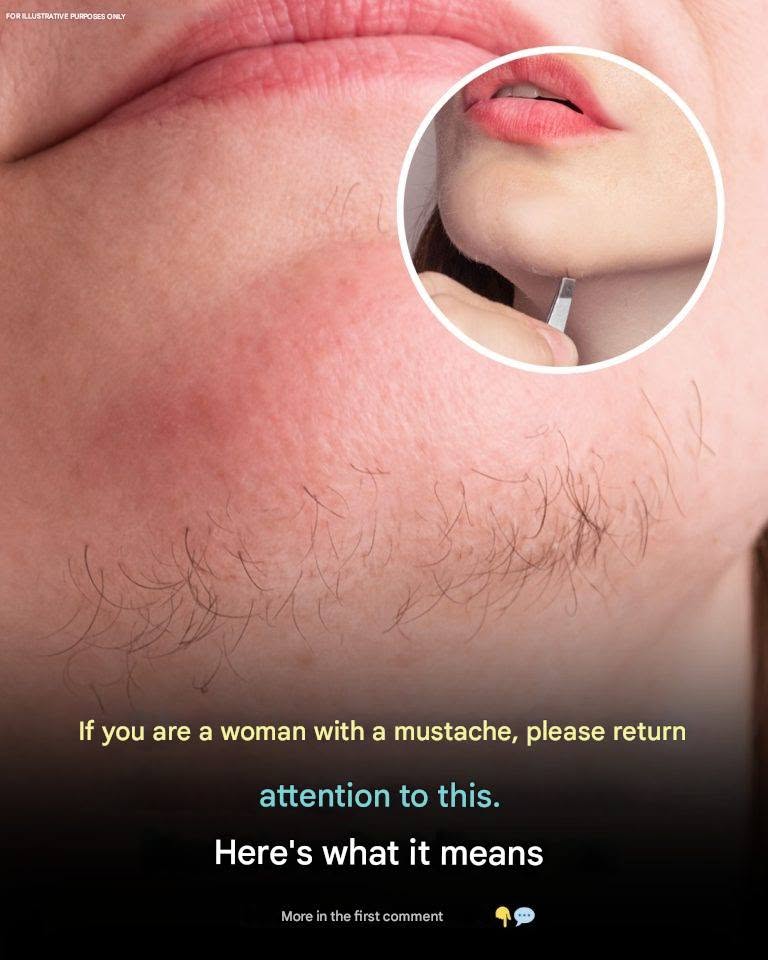
This tension stems from the fact that facial hair is often socially coded as masculine. When women internalize this, the biological norm becomes a psychological burden. Recognizing that hair growth patterns vary depending on background and genetics is the first step toward destigmatizing what, for many, is a natural part of the human experience.
For illustrative purposes only (iStockphoto)
Biology: Why does it grow?
Beard hair appears at the root when the delicate “peach fuzz” (vellus hairs) transforms into thicker, darker “terminal hairs.” This transformation is triggered by androgens, a group of hormones that includes testosterone. Although all women produce androgens, certain factors can disrupt the balance:
Factor Description:
Polycystic ovary syndrome (PCOS) affects 5–15% of women and is the leading cause of hirsutism (excessive hair growth).
Genetics: Women of Mediterranean, Middle Eastern, and South Asian descent often have naturally more visible facial hair.
Aging: During menopause, estrogen levels decline while androgen levels remain relatively stable, leading to the appearance of new facial hair.
Insulin resistance: High insulin levels can stimulate the ovaries to produce more testosterone, which fuels hair growth.
Conditions such as Cushing’s syndrome or congenital adrenal hyperplasia can also be a cause. If hair growth is accompanied by irregular periods, adult acne, or rapid weight gain, it is often a sign to consult an endocrinologist.
For illustrative purposes only (iStockphoto)
Lifestyle and external factors
In addition to internal biology, external factors can affect the hair follicle:
Medications: Anabolic steroids, some epilepsy medications, and even some chemotherapy drugs can alter hair structure.
Weight fluctuations: Rapid weight changes can disrupt the estrogen-androgen balance. In cases of extreme nutritional stress (such as anorexia), the body may produce lanugo—fine, fluffy hairs—as a protective measure.
Hair “loss and gain” with aging: Many women find it frustrating that, along with the loss of scalp hair due to menopause, they gain hair on their chin. This is a direct result of changing hormonal balance.
Navigating hair removal: From tweezers to technology.
The “best” removal method is entirely subjective, depending on skin sensitivity, budget, and goals.
For illustrative purposes only (iStockphoto)
Home and manual methods
Tweezing: Ideal for occasional hairs, but time-consuming for localized hairs.
Shaving/Dermaplaning: A common myth suggests that shaving causes thicker hair growth; this is not the case. It simply creates a dull blade on the hair shaft.
Threading/Sugaring: These are gentler on the skin than traditional waxing, which can cause irritation in hormonally sensitive areas.
Medical and permanent solutions
Topical creams: Prescription options like eflornithine can slow the growth rate.
Antiandrogens: Medications like spironolactone treat the cause by lowering androgen activity.
Laser and electrolysis: Lasers work best on the contrast of dark hair and light skin, while electrolysis remains the only FDA-approved method for truly permanent hair removal.
ADVERTISEMENT
