The Role of Scientific Research
Scientific understanding continues to evolve as new studies become available.
Regulatory agencies regularly reassess pesticides using updated toxicological data, residue monitoring, environmental studies, and epidemiological research. As evidence changes, approvals may be modified, additional restrictions introduced, or products withdrawn from the market.
This continual review process explains why pesticide regulations sometimes differ between countries and why standards can change over time.
Looking Toward Sustainable Farming
Many researchers believe that reducing dependence on highly hazardous pesticides will require more than simply banning individual chemicals.
Potential long-term solutions include:
- Integrated Pest Management (IPM), which combines biological, cultural, and chemical methods to minimize pesticide use.
- Development of pest-resistant crop varieties.
- Biological pest control using natural predators.
- Precision agriculture technologies that target pesticide application more accurately.
- Improved monitoring systems to detect pest outbreaks early.
- Continued investment in safer crop-protection products with lower environmental impacts.
These strategies aim to protect crop yields while reducing potential risks to consumers and ecosystems.
The Pharmaceutical Question
Some commentators argue that major corporations operate in both agricultural chemicals and pharmaceutical markets, raising concerns about potential conflicts of interest. While it is true that certain multinational companies have historically operated across multiple sectors or have undergone mergers and acquisitions, the broader claim that companies intentionally profit from both harmful chemicals and treatments for resulting diseases is not supported by clear scientific evidence.
Public health experts generally emphasize that agricultural regulation should be guided by transparent scientific evaluation, independent oversight, and continuous monitoring rather than assumptions about corporate motives.
Conclusion
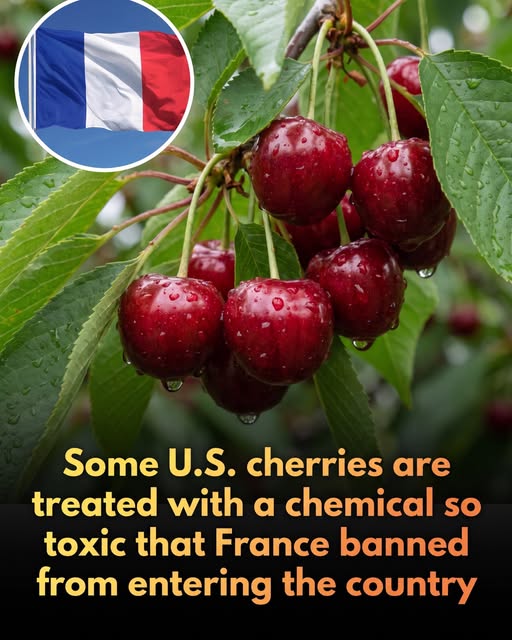
France’s restrictions on imported cherries treated with dimethoate became a symbol of the broader international debate over food safety, pesticide regulation, and agricultural sustainability.
Rather than representing a simple disagreement over one chemical, the issue illustrates two different philosophies for managing scientific uncertainty: one emphasizing precaution before widespread exposure, and the other focusing on risk assessment based on available evidence.
As global agriculture continues to evolve, policymakers face the ongoing challenge of ensuring abundant food production while safeguarding public health and protecting the environment. Continued scientific research, transparent regulation, and investment in sustainable farming practices will remain essential in achieving that balance.
ADVERTISEMENT
