🌊 Think of It Like a Dam Holding Back Water
Imagine a dam holding back a lake.
The greatest pressure is always at the bottom, not the top.
If the dam develops a weak point, that’s where the water is most likely to push through.
Your abdominal wall works in a similar way.
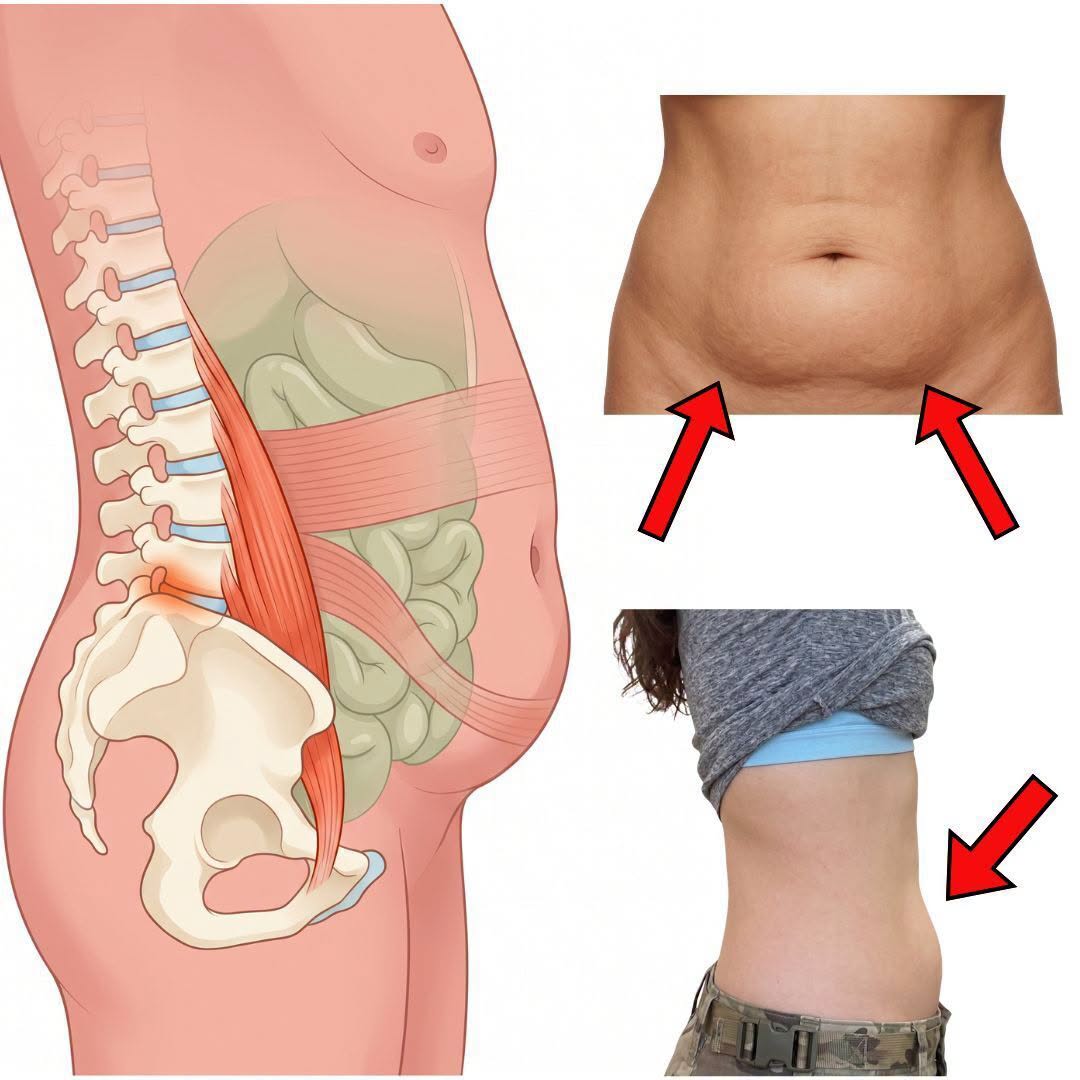
The rib cage reinforces the upper abdomen, while the lower abdomen relies mainly on muscular support.
When the transverse abdominis becomes weak or inactive, the lower abdominal wall may not resist internal pressure as effectively, making the lower belly appear more prominent.
That’s why someone can be slim, eat well, exercise regularly, and still notice a lower belly that protrudes.
Sometimes it’s not simply about body fat—it’s also about muscular support and posture.
💪 The Transverse Abdominis: Your Body’s Natural Corset
At this point, you might think:
“I just need to do more crunches.”
Not necessarily.
Traditional abdominal exercises such as crunches mainly strengthen the rectus abdominis—the muscle responsible for the “six-pack.”
This muscle runs vertically and helps bend your trunk forward.
The transverse abdominis, however, works differently.
Its fibers wrap horizontally around your torso like a natural corset.
When it contracts, it gently compresses the abdomen, helping stabilize your core and support the lower abdominal wall.
This explains why someone can perform hundreds of crunches yet still struggle with a protruding lower belly if the deeper stabilizing muscles aren’t working efficiently.
ADVERTISEMENT
ADVERTISEMENT
