Outside the courthouse, reporters shouted questions.
“Isabel, do you forgive your husband?”
“Do you forgive your sister?”
“What will you tell your son?”
You stopped only once.
You looked into the cameras and spoke slowly.
“I will tell my son that love does not require silence. I will tell him that family does not mean protecting people who hurt you. And I will tell him that he saved my life, but he never should have had to.”
Then you walked away.
The rest of your life did not begin all at once.
It began in small ordinary moments.
The first morning you made breakfast without needing to sit down halfway through.
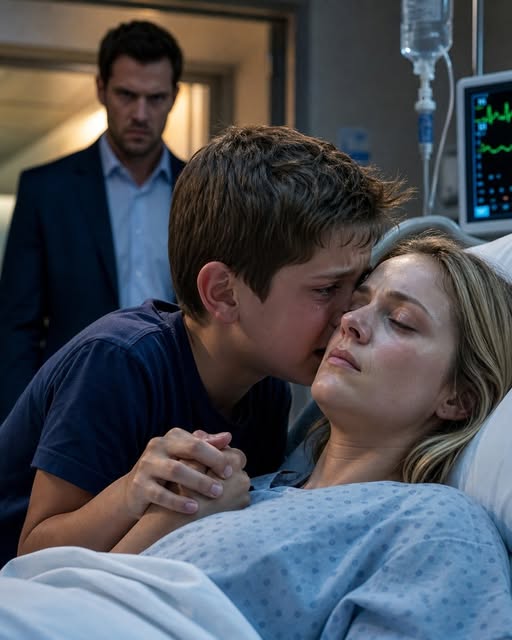
The first time Emiliano went to school without calling three times to make sure you were still home.
The first time you laughed at something so hard your scar hurt, and you did not mind the pain because it came from joy.
Julia became more than your attorney. She became the person who taught you that preparation is not paranoia when someone has given you reason to be afraid. She helped you create a foundation for children who witness domestic violence, especially those who are forced to become protectors before they are old enough to understand what protection costs.
You named it The Emiliano Project.
He hated the attention at first.
Then he asked if the logo could have a small lighthouse.
“Because I called for help,” he said. “And help came.”
So the foundation logo became a lighthouse with one small window glowing.
Your first public speech was in a community center with plastic chairs and bad coffee. Your hands shook so badly you almost dropped the microphone. Then you saw three mothers in the front row holding their children’s hands the way Emiliano had held yours.
So you spoke.
You told them that warning signs often arrive dressed as concern. A husband asking you to sign “protective” papers. A sister telling you not to overreact. A family member saying you are paranoid because your instincts are inconvenient.
You told them to write things down.
Tell one safe person.
Keep copies.
Believe the child who whispers.
Afterward, a woman approached you with a black eye hidden under makeup and a little boy pressed against her side. She did not say much. She only asked, “Can I call your foundation tomorrow?”
You gave her the direct number.
Then you watched her leave alive.
That was when you knew your survival had become more than survival.
It had become a door.
One year after waking up, you and Emiliano drove the road toward Toluca again.
Not the exact curve.
Not at first.
Your therapist had warned you not to rush. Julia had offered to go with you. But Emiliano said he wanted to come, and you realized both of you had been living with the same invisible cliff in your minds.
You stopped at a lookout point before the dangerous stretch.
The air was cold and clean.
Emiliano stood beside you, taller now, his face less haunted, though childhood had not fully returned to him. You hated that. You hated Darío for stealing something no sentence could restore.
But then Emiliano reached into his backpack and pulled out a small toy car.
It was blue.
ADVERTISEMENT
