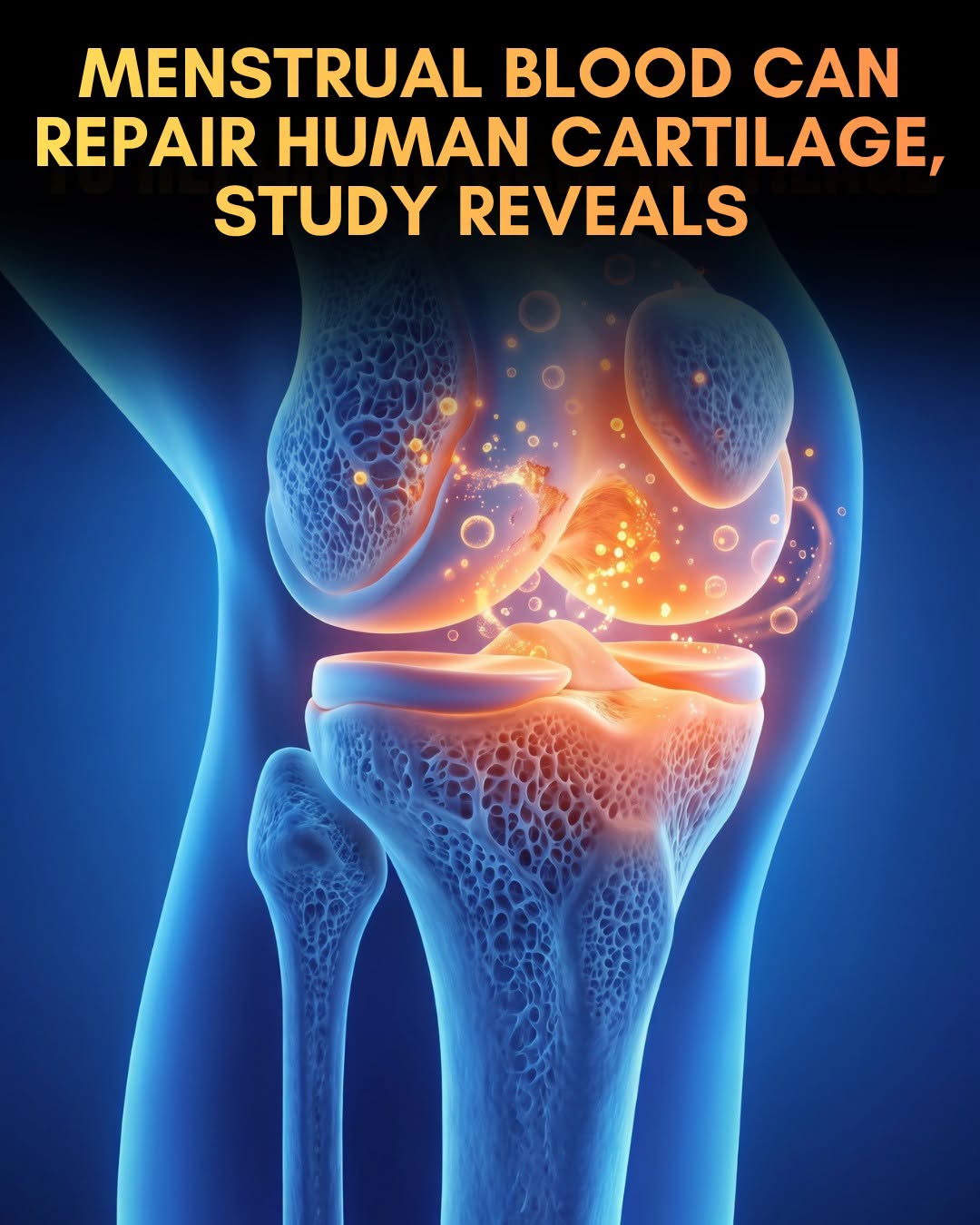
Today, most treatments for osteoarthritis focus on relieving symptoms rather than repairing the damaged tissue. Pain medications, physical therapy, injections, and even joint replacement surgery can improve quality of life, but they do not restore lost cartilage.
That is why this research has attracted significant attention.
Scientists believe that menstrual blood-derived mesenchymal stromal cells possess remarkable regenerative abilities because they naturally help rebuild the uterine lining every month. Instead of transplanting the cells themselves, the researchers focused on the extracellular vesicles they release. This cell-free approach could potentially avoid some of the challenges associated with stem cell therapies, including immune reactions and certain ethical concerns.
Another major advantage is that menstrual blood can be collected non-invasively, unlike bone marrow, which requires a painful extraction procedure. If future studies confirm these findings, menstrual blood-derived extracellular vesicles could become a more accessible source of regenerative therapies.
However, there is an important point to remember.
The study was conducted in vitro, meaning the experiments took place in laboratory conditions using cells—not in human patients. While the results are highly promising, much more research is needed before this approach can become a medical treatment. Scientists must still determine whether the therapy is safe, effective, and durable in animals and, eventually, in large clinical trials involving people.
Even so, the discovery highlights the growing potential of regenerative medicine. Resources once considered medical waste may one day provide new ways to repair damaged tissues and improve the lives of millions living with osteoarthritis and other degenerative joint diseases.
For now, the findings represent an exciting scientific breakthrough—but not yet a treatment available in hospitals. If future clinical studies are successful, this unexpected source of healing could transform how damaged joints are treated for generations to come.
ADVERTISEMENT
