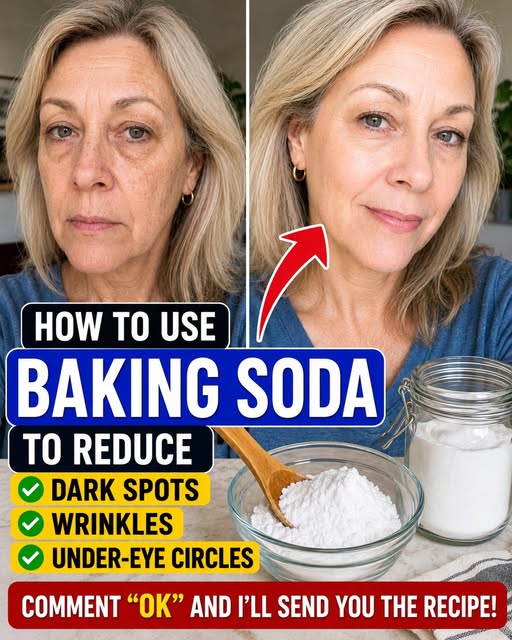
Many people over 60 notice dark spots from years of sun exposure, fine lines that seem to appear overnight, and dark circles under the eyes that make the face look more tired than it feels. These natural changes can quietly affect confidence when you look in the mirror or meet friends. It is completely understandable to look for simple, affordable solutions already sitting in your kitchen cupboard.
Baking soda often pops up in online suggestions as an easy exfoliant that might brighten and smooth mature skin. Yet before you mix up a mask, it is worth understanding exactly how this common household item interacts with skin that has naturally become thinner and drier with time. The information ahead gives you the full picture — including why caution matters more than ever after 60, plus three carefully balanced recipes designed with extra gentleness in mind. By the end you will know precisely how to approach it safely, or whether a different path might serve your skin better.
What Baking Soda Actually Does on Skin
Baking soda, or sodium bicarbonate, is a mild alkaline powder with a pH around 9. In the kitchen it helps dough rise and absorbs odors. On skin it acts as a physical exfoliant because the tiny crystals can buff away dead surface cells when rubbed gently. Some people also notice it helps absorb excess oil or soothes very occasional minor irritation when heavily diluted.
Mature skin, however, produces less natural oil and repairs itself more slowly. The outermost layer — the acid mantle — sits at a healthy pH of roughly 4.5 to 5.5. This slightly acidic environment keeps moisture locked in and protects against irritants and bacteria. When an alkaline substance like baking soda is applied, even for a short time, it can temporarily raise that pH. The result for many is a feeling of tightness, dryness, or redness that appears hours later.
Research on skin barrier function consistently shows that repeated disruption of this acid mantle can lead to increased water loss, sensitivity, and a higher chance of irritation over weeks or months. That is why most dermatologists advise against regular facial use, especially for anyone whose skin is already drier or thinner.
Potential Benefits People Notice — and Their Limits
Some individuals report that occasional, very diluted baking soda masks leave their skin feeling smoother for a day or two. The gentle buffing can remove dull dead cells, which may make dark spots from sun damage appear slightly lighter temporarily and give a fresher look. A few also find it helps calm occasional redness when mixed with soothing ingredients.
These effects are usually short-lived. They come from simple surface exfoliation rather than any deep change in collagen, pigmentation, or skin structure. Dark circles, which often stem from thinner skin showing blood vessels, genetics, or fluid shifts, rarely improve meaningfully from baking soda. Wrinkles caused by years of sun exposure and natural aging need consistent broad-spectrum sun protection, hydration, and supportive habits far more than any single kitchen ingredient.
The honest picture is this: baking soda offers inexpensive, temporary surface smoothing for some people when used with great care. It does not deliver lasting transformation or replace proven daily skincare habits. Many who try it once or twice decide the risk of dryness or irritation outweighs the brief benefit.
Why Extra Caution Is Essential After 60

Skin after 60 has a thinner epidermis and fewer natural lipids to maintain the barrier. Any alkaline product can tip the balance more dramatically than it would on younger skin. Possible consequences include:
- Increased dryness and flakiness that make fine lines look more noticeable
- Redness or stinging that lingers
- Greater sensitivity to other products you normally tolerate
- In rare cases, small cracks in the surface that raise infection risk
If you already use retinoids, alpha-hydroxy acids, or have conditions such as eczema, rosacea, or very reactive skin, baking soda is best avoided altogether. The same goes for anyone with open cuts, recent facial procedures, or skin that is currently peeling or inflamed.
The safest mindset is simple: treat baking soda as an occasional experiment, never a routine. One short session every 7–10 days at most, only if your skin feels comfortable afterward. Always stop at the first sign of discomfort.
How to Patch Test and Apply Baking Soda Safely

Before any mask reaches your full face, do this:
- Mix a tiny amount — about ¼ teaspoon baking soda with 1 tablespoon of plain water or honey.
- Apply a small dab to the inside of your forearm or just below the jawline.
- Leave it for 5–10 minutes, then rinse.
- Wait 24 hours and watch for redness, itching, or bumps.
If your skin stays calm, you can consider a facial test. Here is the careful method most people who tolerate it follow:
- Start with freshly cleansed skin using a very mild, fragrance-free cleanser. Pat dry.
- Mix your chosen recipe in a small bowl — never use more than ½ teaspoon of baking soda for the entire face.
- Apply with clean fingertips using light, circular motions. Keep it away from the delicate eye area and lips.
- Leave on for no more than 5–8 minutes the first few times. Set a timer.
- Rinse thoroughly with lukewarm water. Never use hot water, which can worsen dryness.
- Pat dry gently and apply a rich, fragrance-free moisturizer right away. Look for ingredients such as ceramides, glycerin, or hyaluronic acid if available.
- The next morning, use broad-spectrum sunscreen even if you stay indoors. Exfoliated skin can be more sun-sensitive.
Listen to your skin every single time. Tightness, warmth, or visible redness means stop and give your barrier several days to recover before considering another try.
ADVERTISEMENT
