Ingredients
- 2 tablespoons plain, unsweetened yogurt (full-fat Greek yogurt is especially nice)
- ¼ teaspoon baking soda
- Optional: 1 teaspoon finely mashed ripe banana or a few drops of rose water for extra softness
Instructions
- Mix yogurt and baking soda until no lumps remain. Add banana or rose water if desired.
- Apply a generous layer to clean skin with clean fingers.
- Leave on for 5–7 minutes. It should feel cool and soothing.
- Rinse thoroughly with lukewarm water.
- Apply moisturizer while skin is still slightly damp to lock in hydration.
This recipe works especially well for skin that tends to feel tight after cleansing. Limit to once weekly.
What to Do If Your Skin Reacts
Stop use right away. Rinse thoroughly with cool water, apply a plain moisturizer or a thin layer of pure aloe vera gel if you have it, and avoid all other active products for several days. Most minor reactions settle within 24–48 hours. If redness, swelling, or discomfort lasts longer or worsens, contact a dermatologist or your healthcare provider. Never try to “push through” irritation.
Supporting Mature Skin Beyond Any Single Mask
Baking soda masks, even the gentle versions above, are only a small occasional experiment. Daily habits make the biggest difference:
- Cleanse with a mild, pH-balanced formula morning and night.
- Moisturize while skin is damp to trap water.
- Apply broad-spectrum SPF 30 or higher every single morning, rain or shine.
- Stay hydrated throughout the day and include antioxidant-rich foods such as berries, leafy greens, and nuts.
- Prioritize consistent sleep and gentle movement — both support skin repair from within.
Many people over 60 find that simply protecting the barrier they already have brings more visible improvement than any DIY treatment.
Final Thoughts
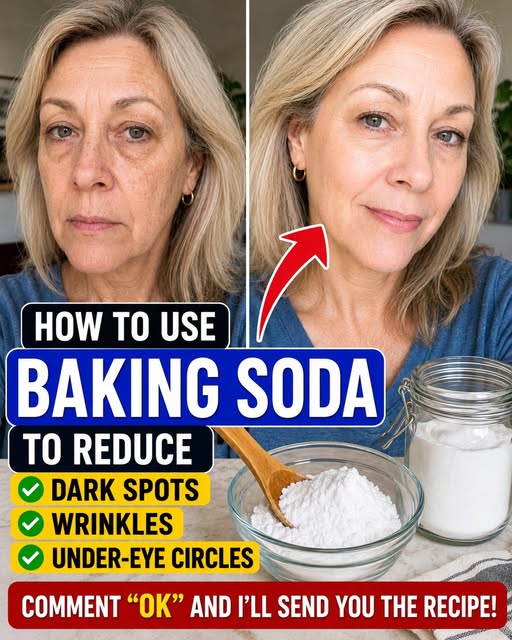
Baking soda can serve as a very occasional, heavily diluted exfoliant for some mature skin when every precaution is followed. The three recipes shared here keep the amount minimal and pair it with calming ingredients to reduce risk. Yet the truth remains that most dermatologists recommend gentler, pH-appropriate options for regular facial care. Dramatic before-and-after results you sometimes see online are not typical and often involve lighting, filters, or other factors.
ADVERTISEMENT
